Lead with the place
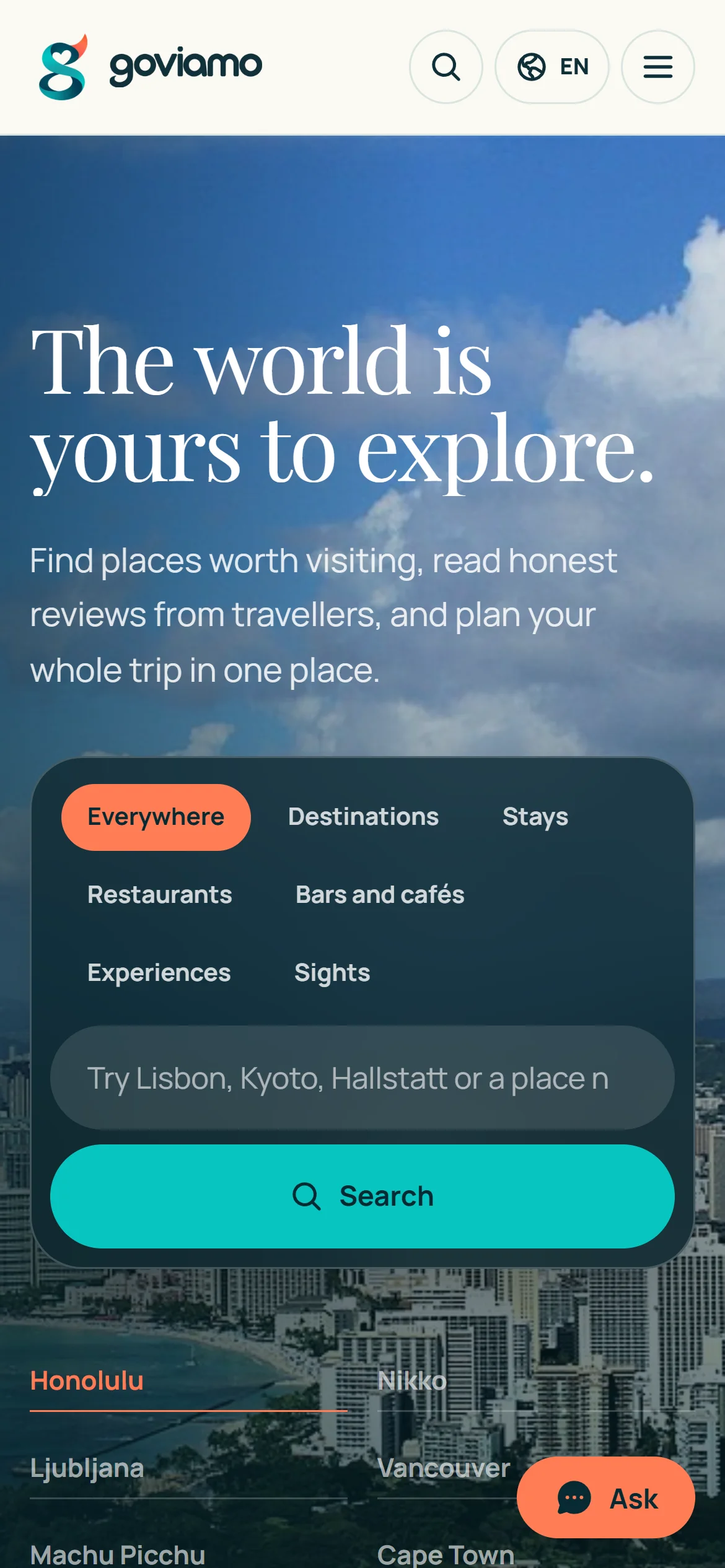
The home page opens on a full-width photo of a real destination, with its coordinates and photo credit, and one search box that can look everywhere or only at stays, restaurants, bars, experiences or sights.
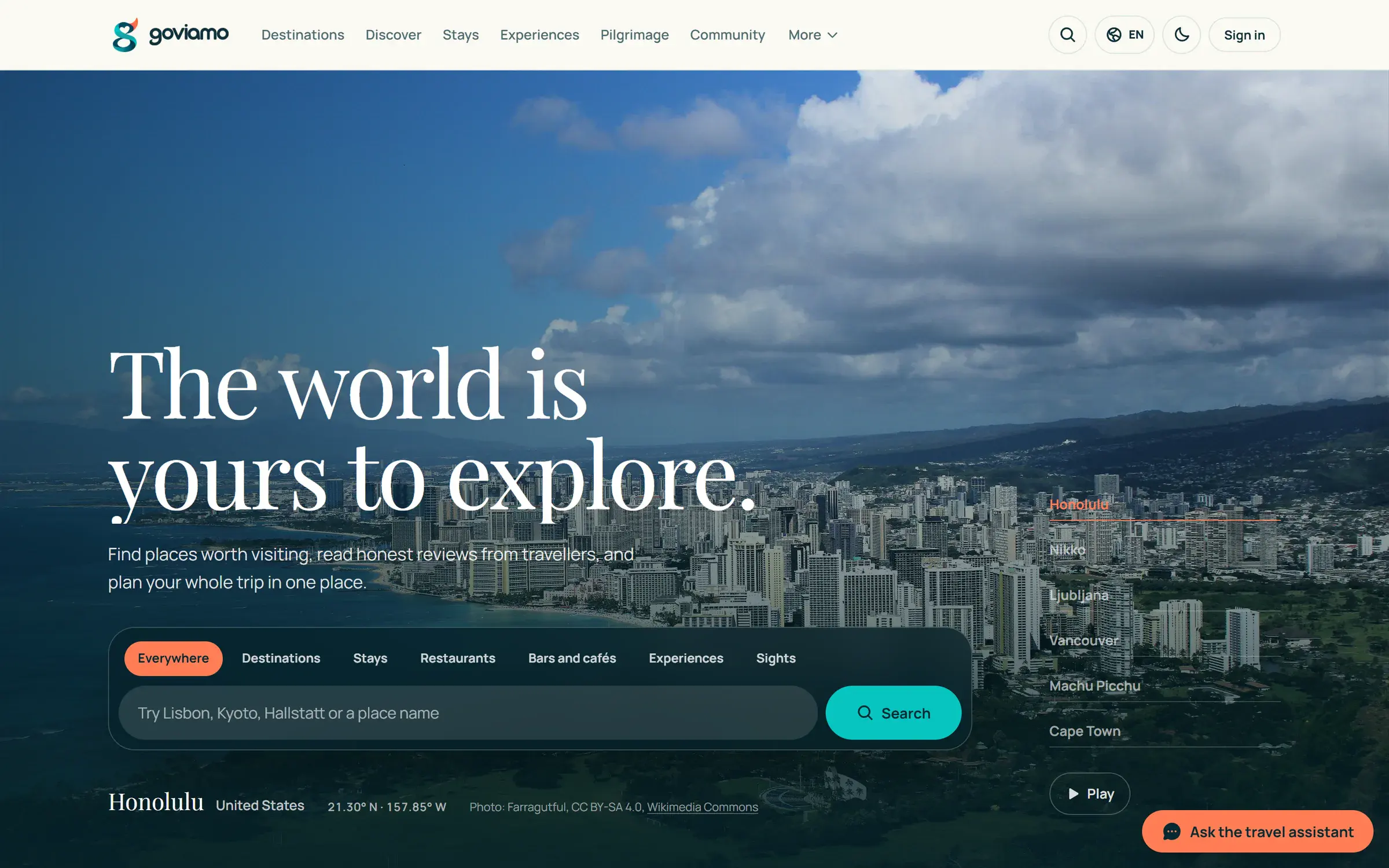
A guide to the whole world that travellers write together: find where to go, read honest reviews and plan the whole trip in one place.
Travel information is everywhere and nowhere: one site for the weather, another for the sights, a third for reviews you can't quite trust. Goviamo puts it in one place, for every country in the world, and says plainly where every fact comes from. It is my own product — I designed and built the website and the apps.
The guide starts from open, freely licensed sources — Wikivoyage, Wikipedia, Wikidata, OpenStreetMap and Wikimedia Commons — and every photo and text carries its author and licence. Ratings exist only when a member writes a review, so a new place starts with none.
The site also says what it will not do: show a price or availability that did not come from the provider, sell or rank reviews, or pretend to be a navigation app. That honesty is part of the design, not a footnote.
Destinations, places, stays, experiences and restaurants for every country, with search across all of them as you type.
A globe to explore, climate by month from 30 years of data, a walking planner for pilgrimage routes and an AI trip planner.
Accounts, saved places and reviews in two parts — what was good and what was not — with tips and questions for other travellers.
The guide as an app for phones and tablets, for Android and iOS. The apps follow soon.
The choices that shape how it looks, reads and behaves — and the reasoning behind them.
The home page opens on a full-width photo of a real destination, with its coordinates and photo credit, and one search box that can look everywhere or only at stays, restaurants, bars, experiences or sights.
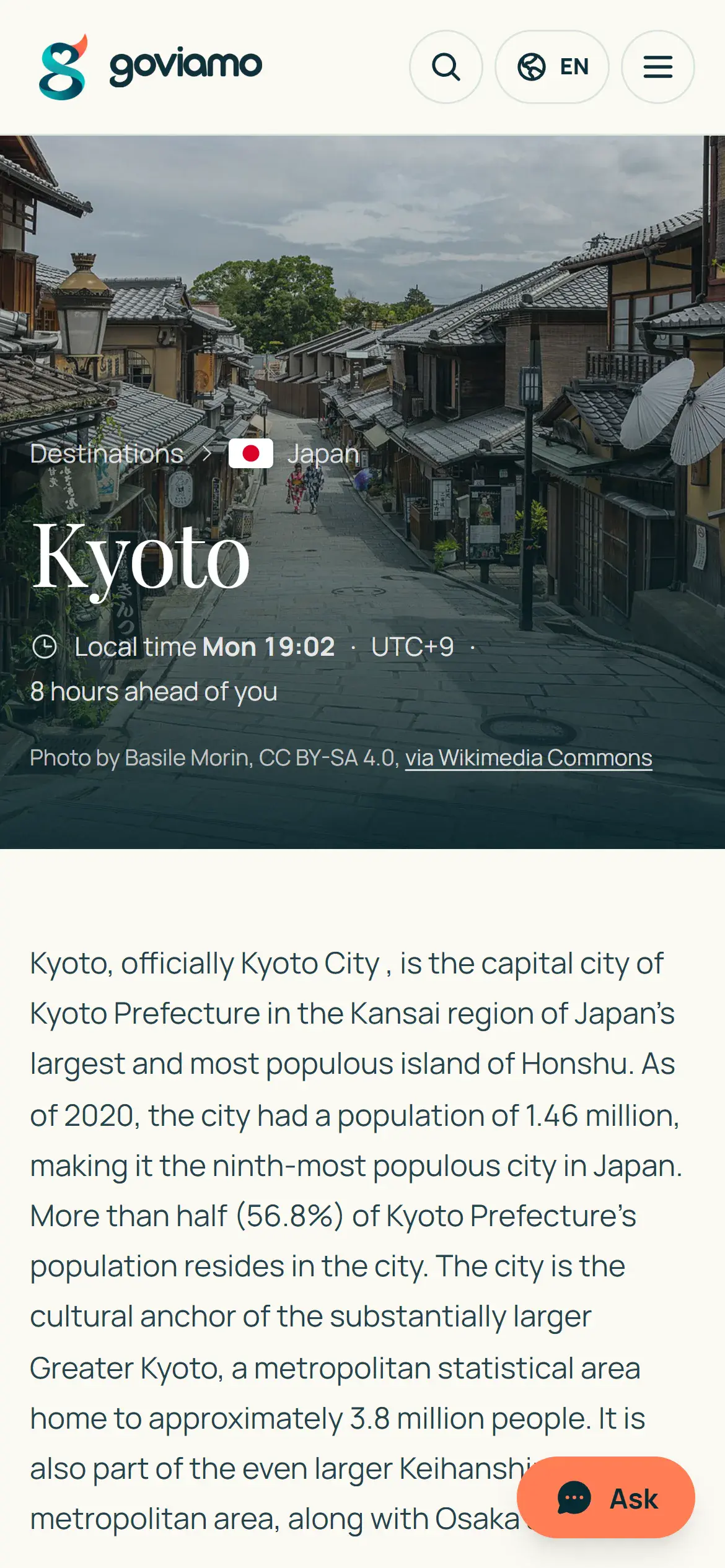
Each destination opens with its photo, the local time and how far ahead or behind you it is, a short introduction with its licence, and four next steps: share, weather by month, getting there and planning a trip here with AI.

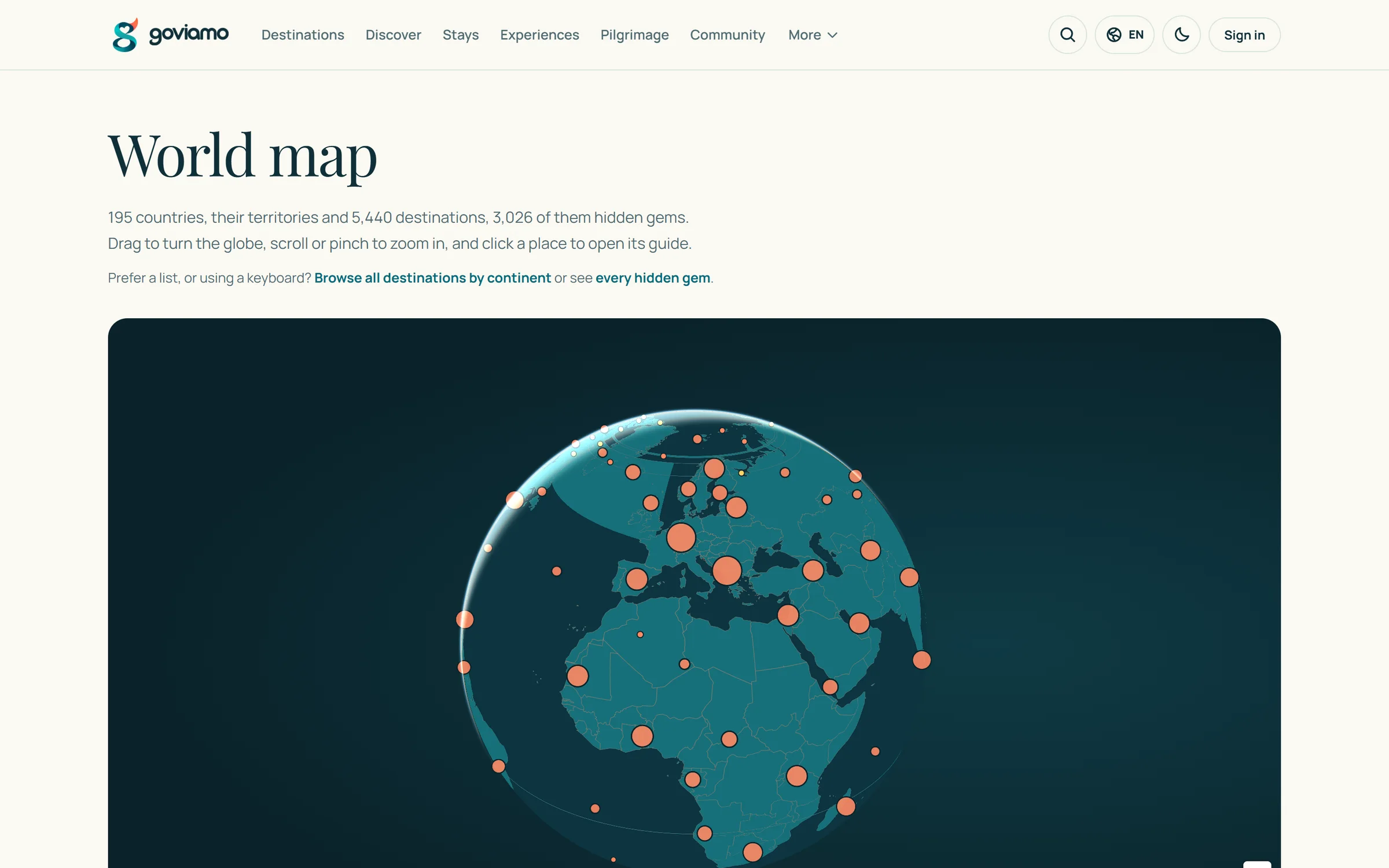
Every destination sits on a globe you can turn and zoom; coral dots are destinations and hidden gems, and a click opens the guide. People who prefer a list or a keyboard get a link to the same places by continent.
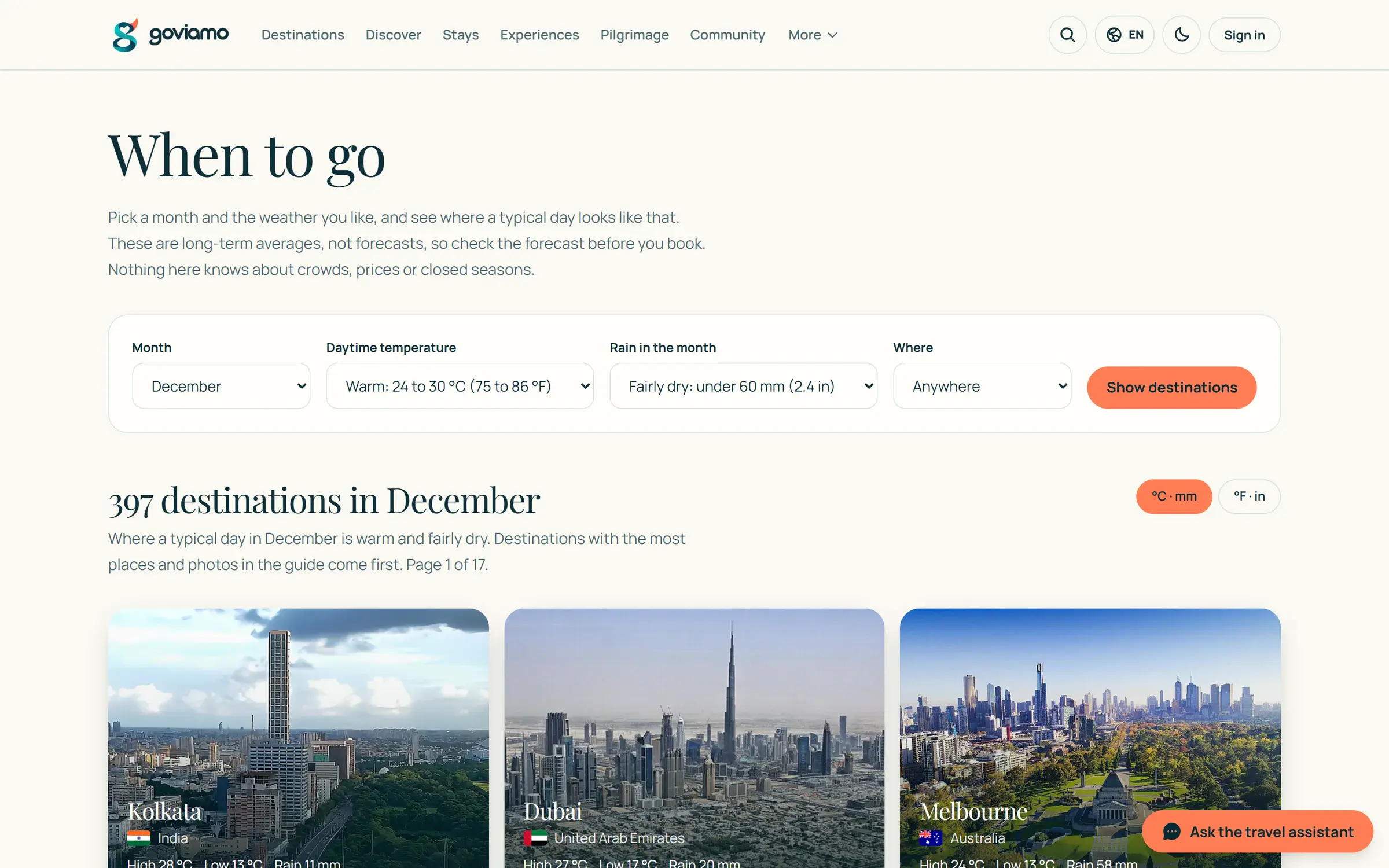
'When to go' asks for a month, the temperature you like and how much rain you accept, and shows where a typical day looks like that. The page says plainly that these are long-term averages, not forecasts.
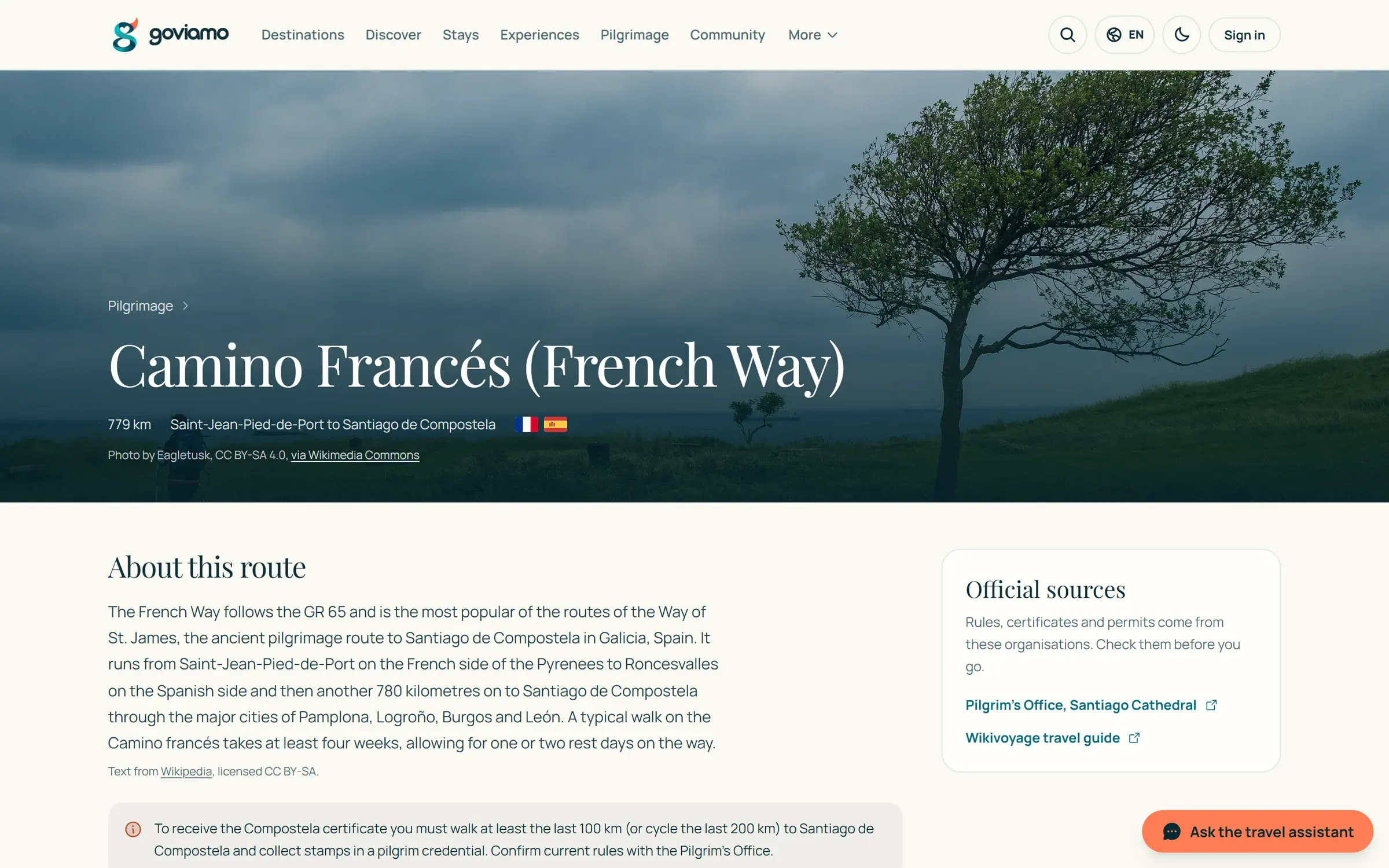
Each pilgrimage route shows its distance, start and finish, the official sources for rules and certificates, and a planner that splits the walk into days that fit your legs and your calendar.
The guide follows the way people decide where to go.
Turn the globe, browse by country or ask where it is warm and dry in a given month.
Open a destination: introduction, local time, weather, getting there and the places worth a visit.
Save places, plan a trip or a pilgrimage walk, or let the AI planner suggest a route.
Back home, write what was good and what was not, so the next traveller chooses better.
The website is live; the apps follow soon.

Read from the live site and the project — nothing here is assumed.
Five projects, five different audiences. If yours is next, let's talk.
Tell me about your project — what it is, who it is for and when you would like it live. I will reply personally.
Start a conversation